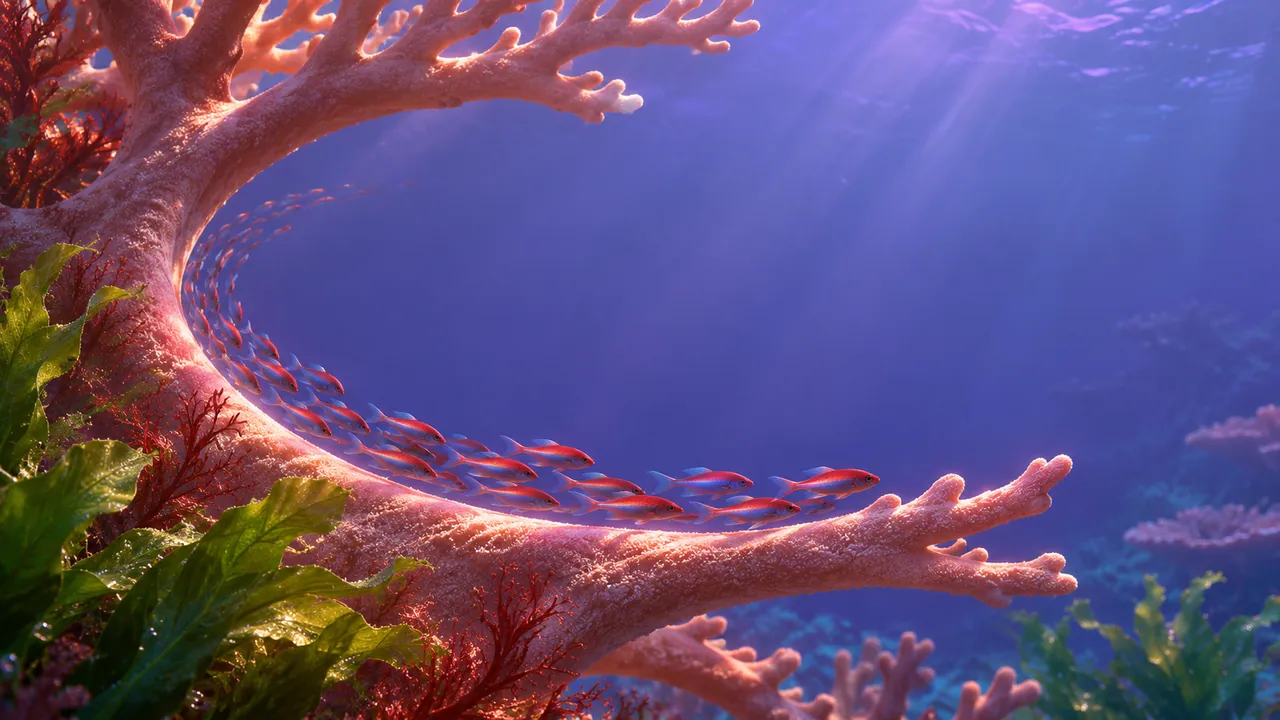
The Tail at the Nursery Bend
Observe a school turning at a narrow coral branch. Compare guidance for its leading fish with space for the tail to enter the protected pocket of water.

The left column holds studies still being adjusted. At the nursery turn we can already see when the front fish cross the edge of the slow pocket. We are checking how to keep enough of the tail visible as the rest of the group moves around the branch. At the garden, the outline of a tile can show the place of a projected crop without changing the established shelter. We are studying the width at which that mark remains readable from the ledge across the bed.
The notes in the other column show two decisions that are present in the pictured designs. In one, an upward trail and a sideways current use cues that move in distinct directions. In another, the branches beside a familiar opening keep enough space around the dark passage to indicate why a school may turn there. A completed note refers to a recorded design decision, while its game remains a prototype.
Read through either column from the notes to the whole case if you want to see the context for the comparison. The two columns let you identify which feature could look different in another pass and which feature the current demonstration already shows. The current atlas links to the same records by their place in the larger site.
Observe a school turning at a narrow coral branch. Compare guidance for its leading fish with space for the tail to enter the protected pocket of water.
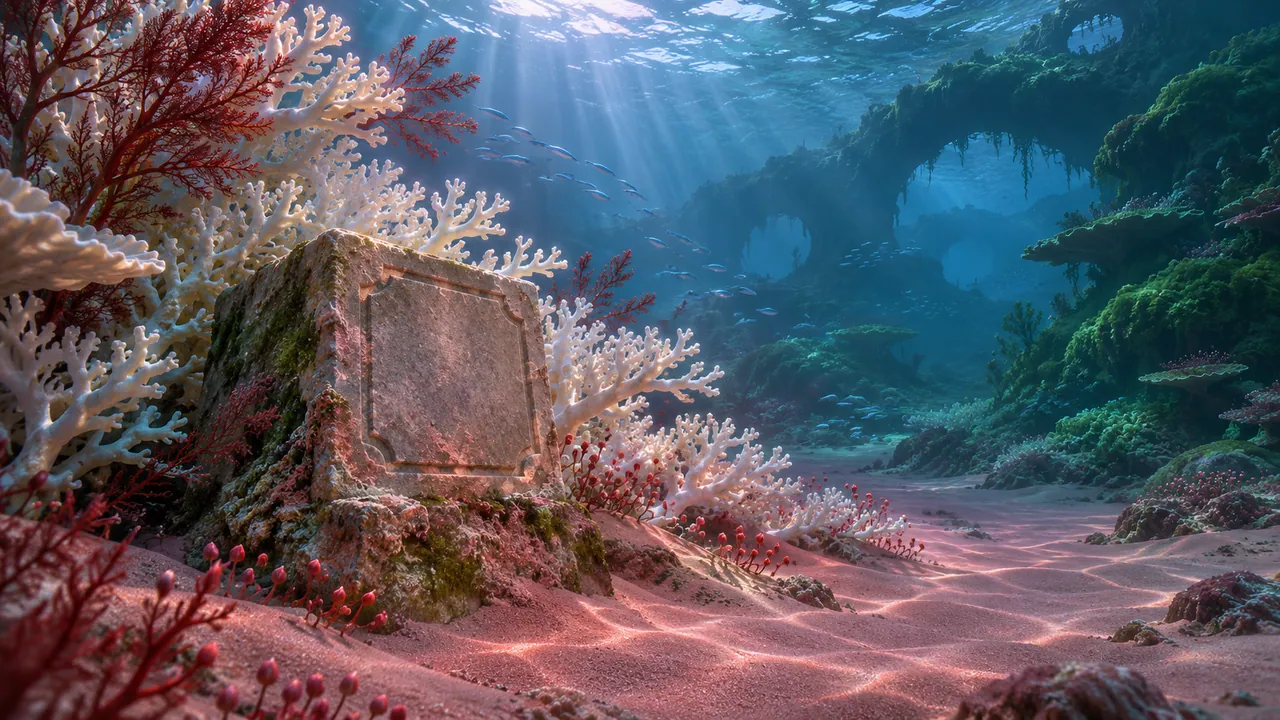
Look at a reef marker from both sides of an invented garden bed. Keep the older branch visible while comparing where a proposed new area of cover begins.
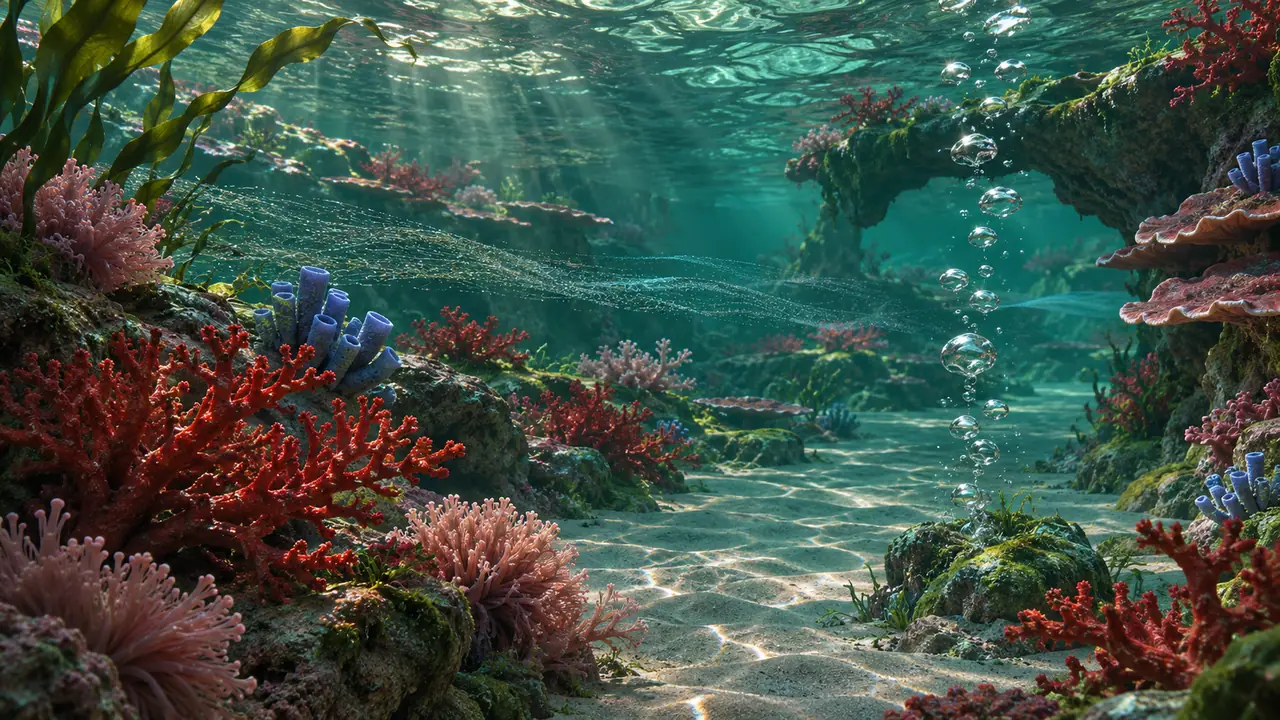
Read two moving traces in a fictional nursery. Use a fixed coral tip and the angle of a drifting particle to distinguish the flow from a line of bubbles.
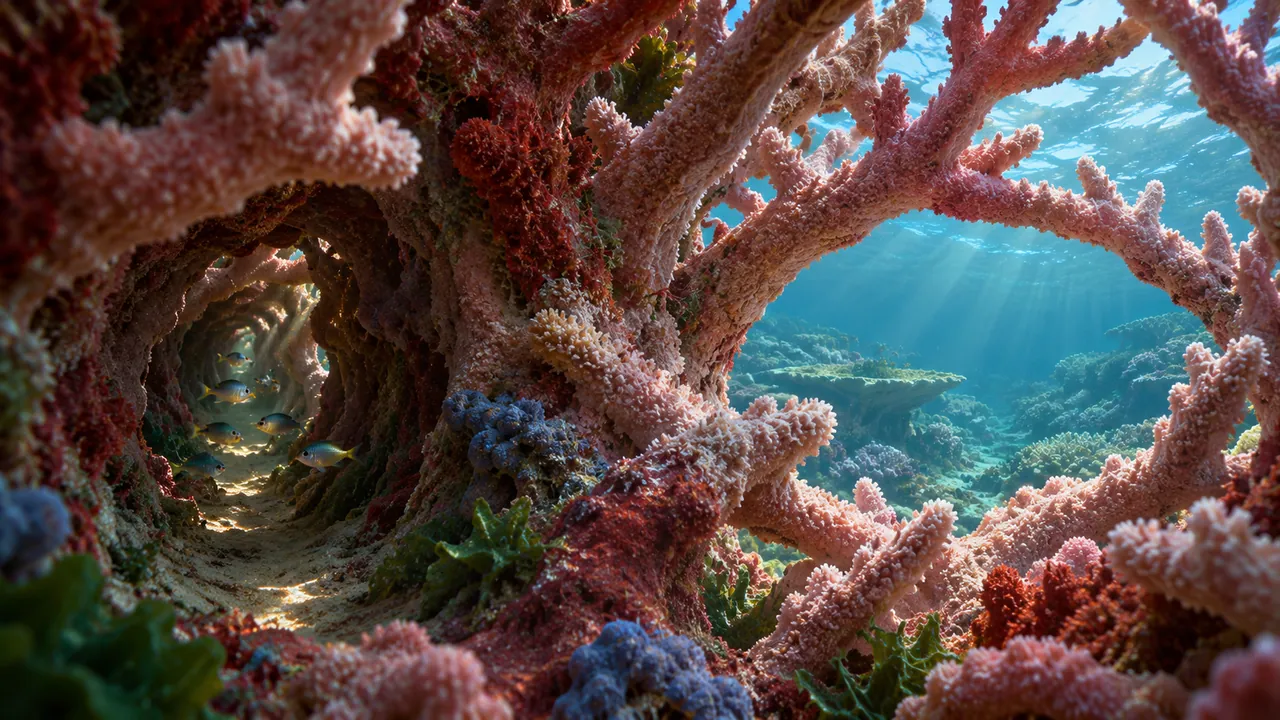
Compare two coral passages from the view available to a reef guardian. See how a school uses the room around a branch, and what that can show about cover.