
The Tail at the Nursery Bend
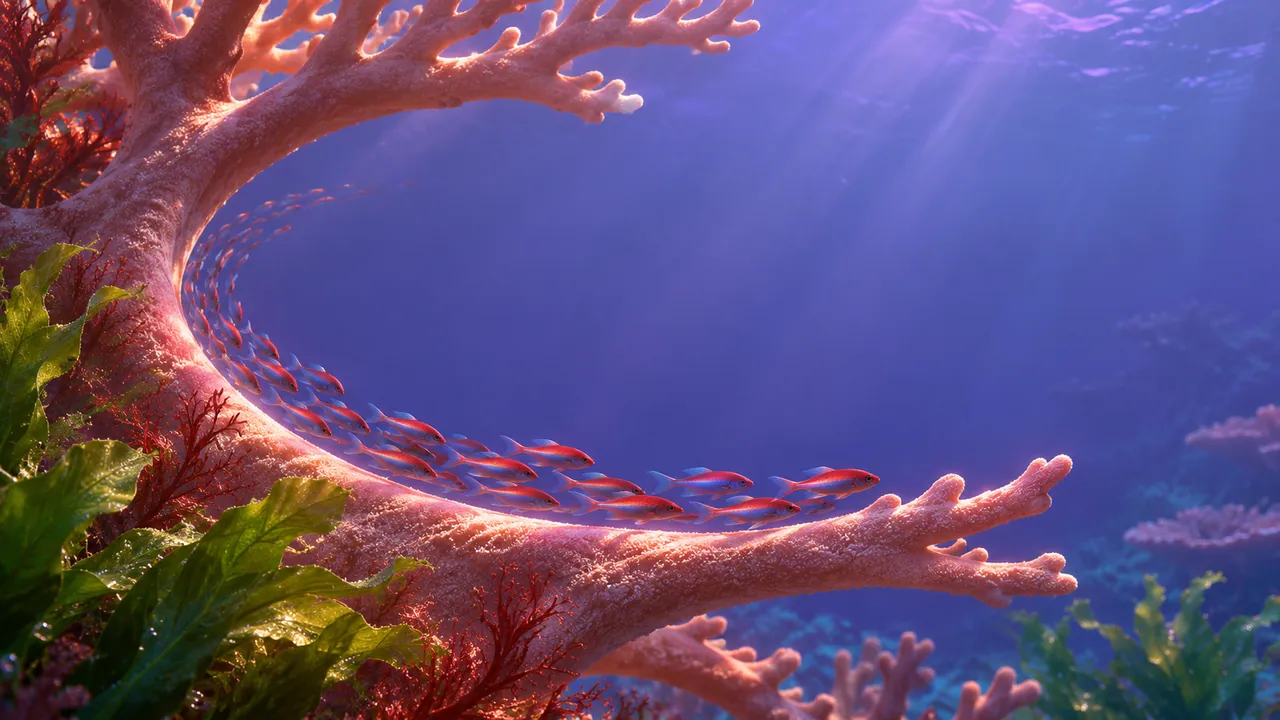
The front of the school can turn into the slow pocket before the rear reaches the fork. The first version of the design showed the entire group adopting one direction as soon as the lead fish entered the pocket. That picture made the turn easy to detect from above, but removed a useful decision. A guide that works for the front should leave a path the tail can also travel. The next simulation pass keeps part of the tail in the old flow while the head is already moving with the current in the other direction. It asks the observer to decide when a change to the guide would improve the result.
Use the visible edge under the branch
The upper view shows a red branch that separates the two parts of the group. Move slightly below that branch to locate the pale underside. The low edge shows where the tail touches a faster crossflow, because several fish tilt away from it before moving alongside the same shape. In an earlier drawing we marked the tail of the school with a brighter halo. That held attention on the group when the shape of the opening mattered more. The patch of lighter coral is visible through more of the turn. An observer can use it as a comparison when the last fish disappears behind the branch.
Preserve a pocket to gather
A smaller branch creates a sheltered sliver at the downstream edge. You can place a weak guide in the sheltered sliver and check whether the tail becomes easier to follow after the turn. Take note of where the first fish stop traveling directly with the flow. If the lead fish leave before the rear comes past the sliver, move the second guide only a little toward the current. Too much movement can also shorten the visible stop for the front. A small margin increases the amount of time that both ends of the turn can be observed. It also gives you a way to compare a steady return with a route that seems to work in only one direction.
Watch the shape instead of a timer
An obvious timer would reveal which trial moved the group faster. The intended question is whether there is a place that allows the school to hold its shape. We read the distance from the curved opening to the point at which the tail lines up again. If that distance becomes longer when we put a guide nearer to the branch, the opening may be supplying less room than it appeared to from above. Stand near the reef lip and see how much of the school becomes hidden while you make the comparison. A shorter visible distance can be valuable if it follows the same safe path and leaves the fish distinct when they emerge.
Try the judgment in the room
Nursery Fork provides a short approach from which you can see the old flow before the first adjustment. Read the Crossflow describes the direction cues in the channel. How Wide Is a Living Branch compares passages at the edge of the nearby garden and gives another way to decide whether the small fish have enough room. The next test keeps the angle of the visible guide constant and moves the branch just enough to change the space alongside the tail. Compare the old view with the new one from the same position. If the effect is easy to describe without a timer or score, we can use the same process to check a different opening.
During that new trial the reference point will sit at the foot of the branch. That location should stay visible when the first fish shelter behind it and the tail continues around the outside.